Account Contact
Your Cart
Pay the courier with no extra fees.
Need help? DistriNode AI can handle any task on our site.

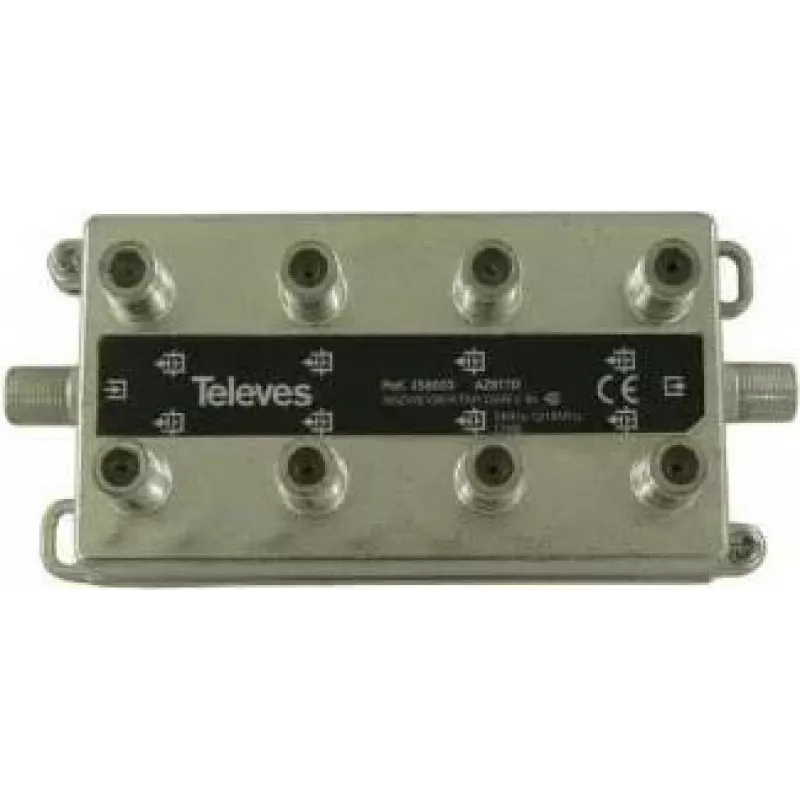
Splitter Televes AZ817D 8-way, 5–1218 MHz, 17 dB insertion loss

Splitter Televes AZ817D 8-way, 5–1218 MHz, 17 dB insertion loss
R843
Televes AZ817D 8-way splitter distributes a single RF feed into eight outputs across a wide frequency range of 5–1218 MHz. The device is designed for stable signal distribution in shared and commercial installations where predictable attenuation and consistent bandwidth are required. With a specifie... Read More
Stock 3 Code 2210179 Brand TELEVES Model AZ817D Warranty 2 Years

Shipping & Returns

Estimated delivery Tuesday, October 6
You will be kept updated through our detailed tracking system
Payment options
EFTPayFastBank CardSnapScanZapperGoogle PayApple PayMobicredMoreTymePay on Arrival

Televes AZ817D 8-way splitter distributes a single RF feed into eight outputs across a wide frequency range of 5–1218 MHz. The device is designed for stable signal distribution in shared and commercial installations where predictable attenuation and consistent bandwidth are required. With a specified insertion loss of 17 dB, this coaxial splitter supports terrestrial and satellite signal paths and is suitable for use in multi-dwelling units, apartment buildings, or professional headend setups.

Advantages

The splitter offers uniform splitting across eight ports with a defined insertion loss value that simplifies link budget calculations and system planning. Its broad 5–1218 MHz passband accommodates VHF, UHF and many satellite IF signals, enabling a single device to serve mixed-signal installations. The compact coaxial design allows straightforward integration into distribution racks or wall-mounted housings while maintaining consistent electrical performance across ports.

Suitable for

  • Apartment building TV distribution
  • Small to medium commercial RF distribution
  • Headend or distribution amplifier input splitting
  • Multi-receiver installations requiring identical feed signals

Key specifications

  • Number of outputs: 8
  • Frequency range: 5–1218 MHz
  • Insertion loss (typical): 17 dB
  • Connector type: coaxial F-type compatible (female)
  • Impedance: 75 Ohm

How to use

Install the splitter close to the incoming feed or distribution amplifier to minimize feeder losses. Connect the main coaxial feed to the splitter input and attach the eight output cables to receivers or downstream amplifiers, ensuring all connectors are properly tightened to maintain screening and impedance. Verify signal levels at representative endpoints and, if necessary, compensate for the 17 dB insertion loss with appropriate amplification or attenuators in the distribution chain. Use weatherproofing measures for outdoor terminations and follow local electrical codes.

Recommendations

For reliable performance, keep cable runs as short as practical and use quality 75 Ohm coaxial cable and connectors. When splitting signals to many endpoints, plan for the specified insertion loss and include distribution amplifiers or line amplifiers where signal levels would otherwise fall below receiver thresholds. Avoid introducing unnecessary passive splitters in series and maintain proper grounding and lightning protection in the installation.

Key Highlights
  • Apartment building TV distribution
  • Small to medium commercial RF distribution
  • Headend or distribution amplifier input splitting
  • Multi-receiver installations requiring identical feed signals
  • Number of outputs: 8
  • Frequency range: 5–1218 MHz
  • Insertion loss (typical): 17 dB
  • Connector type: coaxial F-type compatible (female)
  • Impedance: 75 Ohm
Price history over the last 6 months
Splitter Televes AZ817D 8-way, 5–1218 MHz, 17 dB insertion loss
Current
R843
Lowest
R831
Highest
R843
Change 24H
+R10   +1%
Week
—   
Month
—   

Popular products in this category

WhatsApp
Hi, I’m DistriNode’s AI assistant. I can help you find products, compare options, create quote PDFs, or open support requests.