

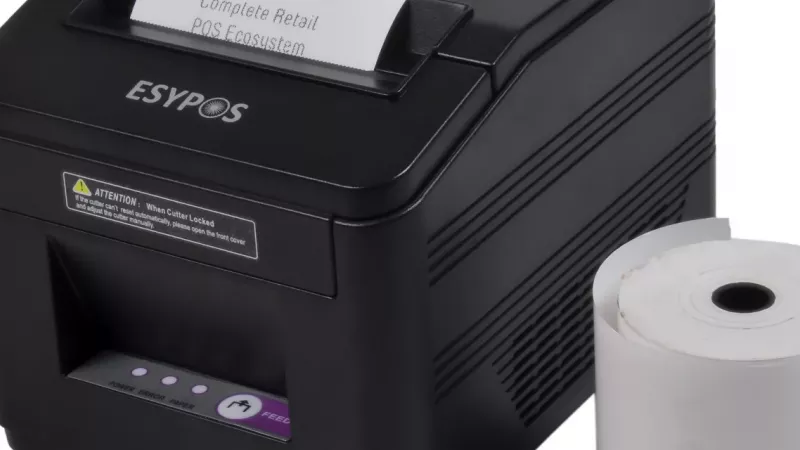
Direct thermal and thermal transfer label printers look almost identical — but they’re built for labels with very different lifespans. Direct thermal prints onto heat-sensitive labels with no ribbon, while thermal transfer melts a ribbon onto the label for a more durable, longer-lasting mark.
For shipping desks, warehouses and retail counters, the right choice comes down to one question: how long must the label stay readable, and what conditions will it face?
Key Takeaway: Choose by label lifespan. Direct thermal is perfect for short-term labels like courier and shipping labels (no ribbon to manage). Thermal transfer is the choice when the label must survive time, heat, sunlight or handling — such as asset and warehouse labels.
Direct Thermal vs Thermal Transfer at a Glance
| Factor | Direct Thermal | Thermal Transfer |
|---|---|---|
| Uses a ribbon? | No — heat-sensitive media | Yes — ribbon melts onto label |
| Label life | Short-term | Long-term, durable |
| Best for | Shipping, receipts, retail tags | Asset, warehouse, outdoor labels |
| Consumables | Labels only | Labels + ribbons |
| Fades over time? | Can fade with heat/light | Resists fading (right media) |

Direct Thermal in Plain Language
Direct thermal printers use no ribbon — the printhead heats special label media, which darkens to form the image. That simplicity makes them popular for shipping labels, receipts and short-term labels, with no ribbon stock to track. The trade-off: the print can fade if exposed to heat, sunlight or friction over time.
Thermal Transfer in Plain Language
Thermal transfer printers use a heated ribbon to transfer the print onto the label. Paired with the right ribbon and label material, this produces marks that last far longer and handle more demanding environments — the right pick when a label must stay legible for months or years.

Where Each One Works Best
Direct thermal suits courier and shipping labels, simple retail or shelf tags, and low-maintenance desks that don’t want to manage ribbon. Thermal transfer suits asset labels, warehouse labelling and outdoor or harsher use, where durability is worth the extra ribbon consumable.
Which Label Printer Fits Your Job?
| Your Use | Best Technology |
|---|---|
| Courier & e-commerce shipping | Direct thermal |
| Retail shelf & price tags | Direct thermal |
| Asset & equipment labels | Thermal transfer |
| Warehouse & storage bins | Thermal transfer |
| Outdoor or harsh conditions | Thermal transfer + suitable media |
Key Takeaway: Check label width before buying the printer, not after — and match the ribbon to the label material on thermal transfer units. The most common costly mistake is using direct thermal labels for a job that needs long-term durability.
How to Buy Your Label Printer in South Africa
DistriNode stocks label and barcode printers, thermal media and ribbons — matched to your label lifespan and width, with local stock and fast delivery. Browse label printers, thermal printers, barcode printers, shipping labels and thermal transfer ribbons.
Frequently Asked Questions
What is the difference between direct thermal and thermal transfer?
Direct thermal prints onto heat-sensitive labels with no ribbon, best for short-term labels. Thermal transfer melts a ribbon onto the label for a durable, long-lasting mark. The core difference is label lifespan and whether a ribbon is used.
Which is better for shipping labels?
Direct thermal is usually ideal for courier and e-commerce shipping labels. They only need to stay readable until delivery, and direct thermal avoids managing ribbon stock — keeping a busy dispatch desk simple and low-maintenance.
Do direct thermal labels fade?
They can, over time, if exposed to heat, sunlight or friction. That’s fine for short-term shipping and receipts, but for labels that must last months or years, thermal transfer with suitable media is the more reliable choice.
Do I need special labels for each printer type?
Yes. Direct thermal needs heat-sensitive media; thermal transfer needs a matching ribbon-and-label combination. Always confirm both the label width and the media type for your printer before ordering consumables.
Sources
- Zebra — direct thermal vs thermal transfer