Account Contact
Your Cart
Pay on delivery – no extra fees
Need help? Ask our AI

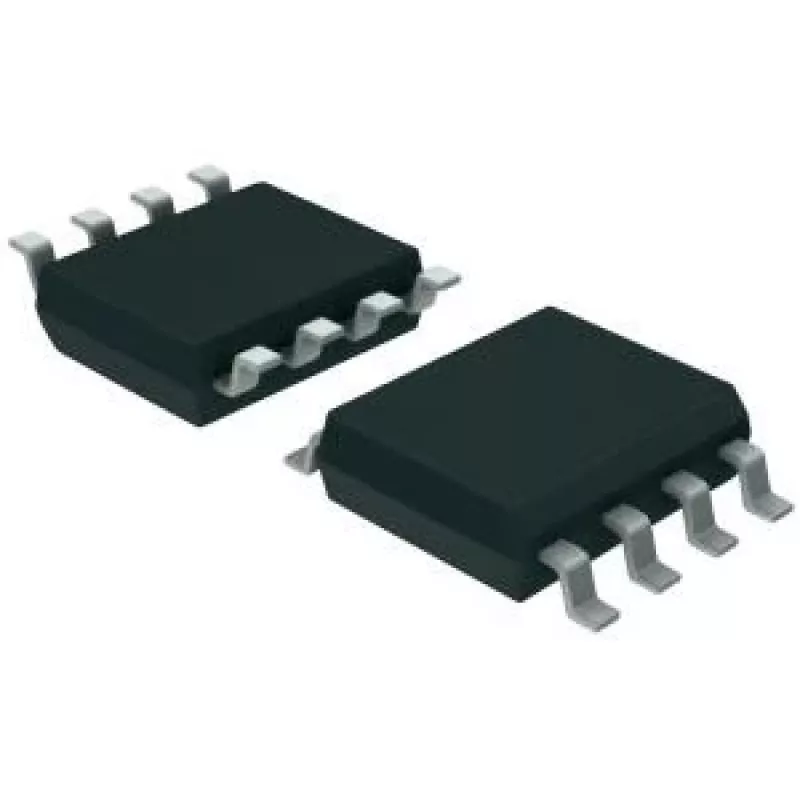
Transceiver RS485 1/1 SOIC-8, Texas Instruments SN75LBC176D

Transceiver RS485 1/1 SOIC-8, Texas Instruments SN75LBC176D
R488
The Transceiver RS485 1/1 SOIC-8 from Texas Instruments SN75LBC176D is a half-duplex differential transceiver designed for reliable communication on RS-485 networks. Packaged in an SOIC-8 form factor, it integrates one driver and one receiver to support standard two-wire multidrop bus topologies. Th... Read More
Stock Out Of StockNo Stock Code 2245655 Brand TEXAS INSTRUMENTS Model SN75LBC176D Warranty 2 Years

Shipping & Returns

The Transceiver RS485 1/1 SOIC-8 from Texas Instruments SN75LBC176D is a half-duplex differential transceiver designed for reliable communication on RS-485 networks. Packaged in an SOIC-8 form factor, it integrates one driver and one receiver to support standard two-wire multidrop bus topologies. The device is intended for applications where robust serial differential signaling and noise immunity are required, such as industrial communication links, process control interfaces, and data acquisition systems.

Advantages

This RS485 transceiver offers integrated driver and receiver circuitry optimized for half-duplex operation, reducing the need for discrete components and simplifying board layout. The SOIC-8 package provides a compact footprint suitable for space-constrained designs. Built to meet common industry signaling levels, the device supports stable differential communication over long cable runs and helps minimize errors from common-mode noise. Its straightforward interface and industry-standard compatibility ease integration into existing RS-485 networks.

Suitable for

  • Industrial serial communication links and fieldbus nodes
  • Process control and PLC interface modules
  • Data acquisition and sensor network gateways
  • Embedded systems requiring robust differential signaling

Key specifications

  • Topology: half-duplex differential transceiver with one driver and one receiver
  • Package: SOIC-8 surface-mount
  • Interface: RS-485/RS-422 compatible differential signaling
  • Operating function: two-wire multidrop bus support
  • Typical application environment: industrial and embedded serial links

How to use

Place the SOIC-8 transceiver on the PCB following the manufacturer’s recommended footprint and adhere to proper grounding and decoupling practices. Connect the A and B differential lines to the bus and provide the supply voltage and signal enable/disable control according to system requirements. Use one transceiver per node on the two-wire bus and manage driver enable timing in half-duplex operation to avoid bus contention. Observe recommended termination and fail-safe resistor practices at the ends of long cable runs to maintain signal integrity.

Recommendations

For reliable operation, follow standard RS-485 installation guidelines: place termination resistors at the cable ends, use twisted-pair shielded cable where appropriate, and ensure a common reference or ground path for long-distance links. Verify enable/disable timing in multi-drop setups and include decoupling capacitors close to the device VCC pin for stable supply operation.

Key Highlights
  • Industrial serial communication links and fieldbus nodes
  • Process control and PLC interface modules
  • Data acquisition and sensor network gateways
  • Embedded systems requiring robust differential signaling
  • Topology: half-duplex differential transceiver with one driver and one receiver
  • Package: SOIC-8 surface-mount
  • Interface: RS-485/RS-422 compatible differential signaling
  • Operating function: two-wire multidrop bus support
  • Typical application environment: industrial and embedded serial links
Price history is not available yet
We are still collecting enough daily price data for this product.

Popular products in this category

WhatsApp
Hi, I’m DistriNode’s AI assistant. I can help you find products, compare options, create quote PDFs, or open support requests.