Account Contact
Your Cart
Pay the courier with no extra fees.
Need help? DistriNode AI can handle any task on our site.

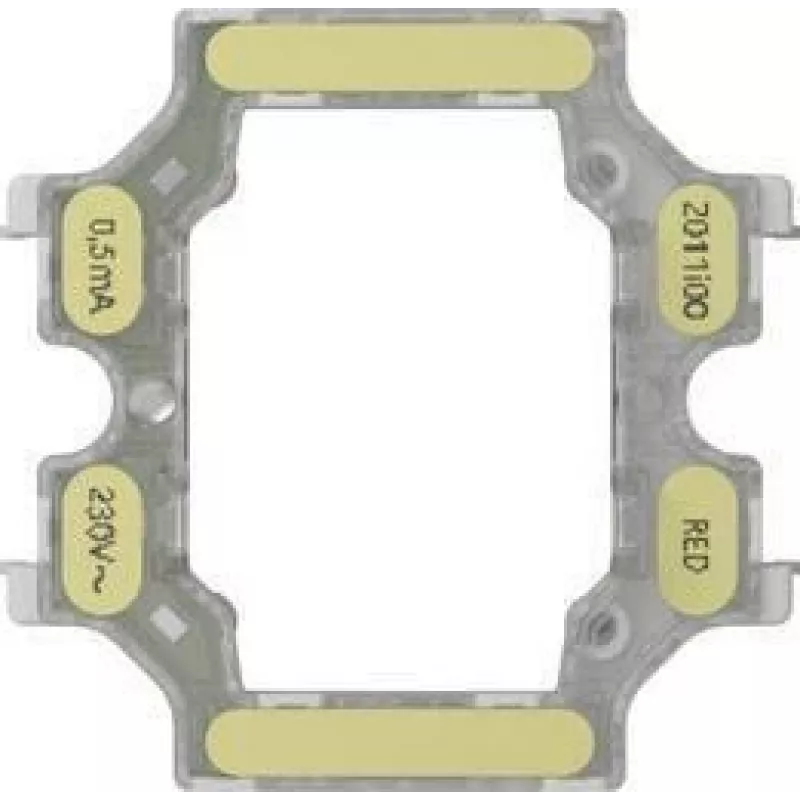
gira LED monitoring module 3792011 — auxiliary relay/earth leakage T2 0.5 mA, 0.5 mA threshold

gira LED monitoring module 3792011 — auxiliary relay/earth leakage T2 0.5 mA, 0.5 mA threshold
R330
gira 3792011 is an LED monitoring module designed as an auxiliary relay for detecting earth leakage currents in electrical installations. Intended for use as an accessory within compatible gira systems, the module monitors residual currents with a 0.5 mA threshold (T2 class) and provides visual sign... Read More
Stock 37 Code 1735495 Brand GIRA Model 3792011 Warranty 2 Years

Shipping & Returns

Estimated delivery Friday, October 2
You will be kept updated through our detailed tracking system
Payment options
EFTPayFastBank CardSnapScanZapperGoogle PayApple PayMobicredMoreTymePay on Arrival

gira 3792011 is an LED monitoring module designed as an auxiliary relay for detecting earth leakage currents in electrical installations. Intended for use as an accessory within compatible gira systems, the module monitors residual currents with a 0.5 mA threshold (T2 class) and provides visual signalling via an integrated LED. The device supports integration in control panels and distribution boards to complement protection and diagnostic functions without altering main protective devices.

Advantages

The module offers precise low-level leakage detection at 0.5 mA, enabling early identification of insulation faults or deteriorating wiring. Its built-in LED provides immediate visual indication of a leak condition for quick on-site assessment. Compact design allows installation inside control cabinets and close coupling to auxiliary circuits. The unit is engineered for use with compatible gira equipment and complements existing protective devices by reporting earth leakage events.

Suitable for

Key specifications

How to use

Install the module according to the electrical design and the manufacturer’s installation guidelines for compatible gira systems. Mount the unit inside the distribution board or control cabinet and connect the sensing and auxiliary relay terminals to the residual current sensor and monitoring circuit. Ensure correct wiring for the LED indicator and output contacts so that the module can signal leakage events to local indicators or remote monitoring systems. Commission the installation by verifying the response at the specified 0.5 mA threshold and checking integration with existing protective measures.

Recommendations

Use this module as an accessory to existing protective devices to provide additional leakage detection and signalling. Verify compatibility with the specific gira installation and follow local electrical codes. Regular functional tests and periodic inspection of wiring connections are recommended to maintain reliable monitoring performance.

Key Highlights
  • Integration in building distribution panels and control cabinets
  • Monitoring residual currents in safety and diagnostic circuits
  • Use as an auxiliary relay in residential and commercial electrical systems
  • Installation where early detection of small earth leakage (0.5 mA) is required
  • Detection threshold: 0.5 mA residual current (T2 class)
  • Output: auxiliary relay signalling compatible with monitoring circuits
  • Visual indicator: integrated LED for local status indication
  • Form factor: compact module suitable for control panels and distribution boards
  • Application: designed for complementary monitoring of earth leakage without replacing main protective devices
Price history over the last 6 months
gira LED monitoring module 3792011 — auxiliary relay/earth leakage T2 0.5 mA, 0.5 mA threshold
Current
R330
Lowest
R318
Highest
R330
Change 24H
+R10   +3%
Week
+R13   +4%
Month
—   

Popular products in this category

WhatsApp
Hi, I’m DistriNode’s AI assistant. I can help you find products, compare options, create quote PDFs, or open support requests.