

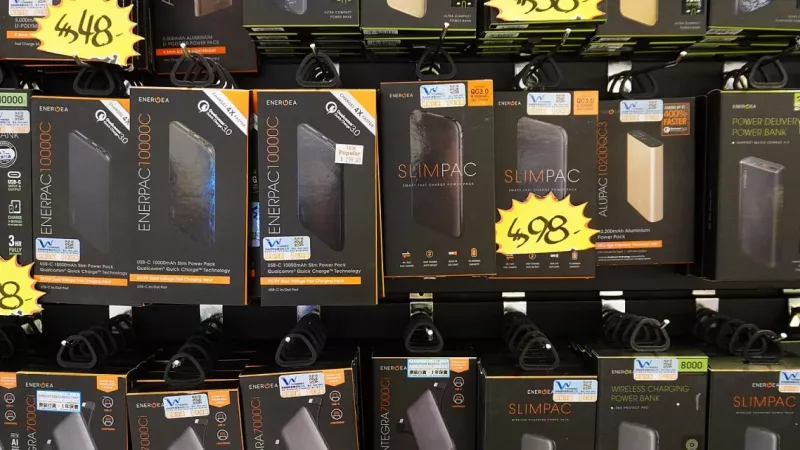
Black Friday 2026 falls on Friday, 27 November, and Cyber Monday follows on 30 November – which means the next eight weeks are the best time to learn how a real tech discount looks before the banners go up. Every year the same pattern repeats: a big red percentage, a crossed-out “was” price and a countdown timer that makes you feel you must decide in the next ten minutes. Some of those deals are genuinely good. Others are ordinary prices dressed up as bargains, and a few are outright scams that only exist to collect card details.
This guide is written for South African shoppers buying laptops, TVs, consoles, headphones and smartwatches. It explains how fake discounts are built, what the Consumer Protection Act says about misleading pricing, how to keep your own price history, why comparing specifications matters more than comparing percentages, and how to spot a fake shop or phishing message. There are no invented discount figures here – just the method we would use ourselves when spending our own rands.
Why Black Friday 2026 needs a plan, not a reflex
Black Friday in South Africa has grown from a one-day American import into a week or more of promotions, and many retailers now start “early Black Friday” campaigns in the first half of November. That makes it harder, not easier, to judge value: when prices move up and down for several weeks, the only reference that counts is the price you saw before the campaign started.
The second reason to plan is that tech is expensive and long-lived. A laptop or TV you buy on impulse at the end of November will probably be on your desk or wall for five years or more. Saving a few hundred rand on the wrong model is not a saving at all if it is too slow, too small or missing a feature you need.
The three questions to ask about any deal
Before you look at the percentage, ask three things. First, is this the exact model I want, with the specification I need? Second, what did this exact model cost at this shop (and at two or three others) in the weeks before the promotion? Third, is the shop itself trustworthy, with a real company behind it and safe payment options? If you cannot answer all three, you are not ready to click “buy”.
Set your budget in price classes, not exact numbers
Prices change daily, so think in budget bands: entry level, mid-range and premium. Decide which band you are shopping in and what minimum specification you expect from that band. That way a flashy discount on a product from a lower band will not tempt you into buying something that does not meet your needs.
How fake discounts are built
Fake discounts rarely involve an outright lie on the price tag. Instead, they rely on a reference price that makes the current price look smaller than it is. Once you know the main techniques, they become easy to recognise.
The inflated “was” price
The simplest trick is to raise the price for a short time before the sale and then “reduce” it back to where it was. The crossed-out number is technically a price the item was once listed at, but it was never the normal selling price. The only defence is your own record of what the item really cost in October and early November.
The anchor price nobody ever paid
Some promotions compare the deal price with a “recommended retail price” or a launch price from long ago. That figure may never have been charged by anyone in South Africa, or it may date from a time when the product was brand new. A big percentage off an anchor like that tells you very little about today’s value.
“Up to” percentages and countdown pressure
Headlines such as “up to 60% off tech” usually mean that one or two items carry the biggest reduction while most products have much smaller ones. Countdown timers and “only 3 left” messages are designed to stop you from comparing. A genuine deal will still be a good deal after you spend ten minutes checking it.
| Trick | What you see | How to check it |
|---|---|---|
| Inflated reference price | Large crossed-out price, big percentage | Compare with your own screenshots from before November |
| Old launch or RRP anchor | “Was” price that seems unusually high | Check what other shops charged for the same model recently |
| “Up to” headline | One banner percentage for a whole category | Look at the actual reduction on the item you want |
| Fake urgency | Timers, low-stock warnings | Ignore the timer, finish your comparison first |
| Spec swap | Familiar name, lower price | Compare the full model code and specification sheet |
What South African law says about misleading prices
South Africa does not use the European “30-day lowest price” rule, so do not expect a crossed-out price to be legally tied to a specific look-back period. What you do have is the Consumer Protection Act 68 of 2008, which sets general rules on honest marketing and pricing.
Section 41: false, misleading or deceptive representations
Section 41 of the Act says that a supplier must not make any false, misleading or deceptive representation about goods or services. A “was” price that was never genuinely charged, or a description that suggests a better specification than the product actually has, can fall into that territory. The Act does not give you a formula, but it gives you a clear principle: the way a deal is presented must not mislead you.
Section 30: bait marketing
Section 30 deals with bait marketing – advertising goods at a particular price when the supplier does not intend to supply them at that price, or does not have reasonable quantities available. If a heavily advertised TV is “sold out” seconds after the sale starts and you are steered towards a more expensive model, that is the kind of situation this section is aimed at.
Section 23: the displayed price
Section 23 covers how prices must be displayed. In general terms, a supplier may not make you pay more than the price it has displayed for the goods. Keep screenshots of the product page, including the price and the date, when you place an order – they are your evidence if the price at checkout or on the invoice is different.
The National Consumer Commission has publicly warned suppliers that Black Friday and Cyber Monday promotions must comply with the Consumer Protection Act and must not be marketed in a misleading or deceptive way.
If you believe a promotion was misleading, start by raising it with the retailer in writing. If that does not resolve the matter, the National Consumer Commission and the relevant industry ombud are the official routes for consumer complaints.

Your cooling-off and warranty rights when buying online
Knowing your rights before you buy makes it much easier to buy calmly. Two laws matter most for online tech purchases in South Africa: the Electronic Communications and Transactions Act and the Consumer Protection Act.
ECTA: seven days after you receive the goods
Section 44 of the Electronic Communications and Transactions Act 25 of 2002 gives consumers who buy goods through an electronic transaction a cooling-off period: you may cancel without reason and without penalty within seven days after receiving the goods. The only charge the supplier may levy is the direct cost of returning the goods. There are exclusions listed in the Act, for example certain financial services, auctions and everyday consumables, so read the shop’s terms as well.
CPA: six-month implied warranty of quality
Section 56 of the Consumer Protection Act gives you an implied warranty that goods are of good quality, reasonably suitable for their normal purpose and free of defects. If a product fails within six months of delivery because of such a defect, you can return it and choose repair, replacement or a refund, subject to the conditions in the Act. Manufacturer warranties come on top of this and run according to the manufacturer’s own terms.
Legal firm Michalsons explains how the ECT Act and the CPA interact for electronic transactions, and Dentons has a useful overview of e-commerce consumer rules if you want more detail.
| Right | Source | What it means for you |
|---|---|---|
| Cancel an online purchase | ECTA section 44 | Within seven days of receiving goods, without reason; you may pay the direct return cost |
| Defective goods | CPA section 56 | Within six months: repair, replacement or refund for qualifying defects |
| Honest marketing | CPA section 41 | No false, misleading or deceptive representations about goods or prices |
| Bait marketing | CPA section 30 | Advertised prices must be genuinely available |
| Manufacturer warranty | Manufacturer terms | Extra cover according to the manufacturer’s conditions |
How to track price history yourself
Because South African law does not force a 30-day reference price, your own notes are the best protection against inflated “was” prices. Start now, in October, and keep it simple.
Screenshots with dates
For every product on your list, take a screenshot of the product page once a week until Black Friday. Make sure the model code, the price and the date are visible. Store them in one folder per product. When the sale arrives you will know immediately whether the deal price is lower than the normal price you saw.
A one-page spreadsheet
A simple spreadsheet with columns for product, exact model code, shop, date and price is enough. Add two or three shops for each product. Over a few weeks you will see the normal price range, and you will spot sudden price jumps just before the promotion.
Price comparison sites and wishlists
Price comparison websites and shop wishlists can help, especially those that show a price history chart. Treat them as a second opinion rather than the final word: check that the listing they track is the exact same model, not a similar variant with a different code.
Compare specifications, not just percentages
The most expensive Black Friday mistake is not paying a little too much – it is buying the wrong product because the discount looked impressive. Electronics are full of near-identical names hiding very different hardware.
Older models and previous generations
Retailers often clear older stock during Black Friday. That can be a real opportunity, because last year’s model is sometimes perfectly good for your needs. The problem is when the older model is presented next to an anchor price that belongs to its newer successor. Always check the release year or model generation and compare it with the current version.
Lower-spec variants with the same name
A laptop line can include versions with different processors, memory, storage and screens under almost the same name. TVs are sold in several sizes and series with different panels and processors. Consoles may come in disc and digital editions. Compare the full model code, not the marketing name.
Refurbished, open-box and grey imports
Refurbished and open-box products can be good value when the seller clearly states the condition, the battery health where relevant and the warranty that applies. Be careful with parallel or grey imports: they may be cheaper but may not be covered by the local distributor’s warranty network, and power plugs or regional settings may differ.
A rule of thumb that never fails: if you cannot find the exact model code on the product page, you cannot compare the deal – and you should not buy it yet.
Bundle tricks and add-ons
Bundles can be genuinely useful – a console with a second controller, a laptop with a bag and mouse – but they are also a way to make price comparison harder. When three items are sold as one, you cannot easily see what each one costs.
Price the bundle item by item
Look up what each part of the bundle costs on its own. If you would not buy the extra items anyway, their value to you is zero, no matter what the bundle banner says. Sometimes the main product alone, bought elsewhere, is cheaper than the whole package.
Extended warranties and service plans
Extended warranties and insurance are often added at checkout. Read what they cover and compare that with your legal rights and the manufacturer warranty. Do not let a pre-ticked box add costs you did not choose.
Laptops: what to check before you buy
Laptops are the main reason many people shop on Black Friday, and the category where spec swaps are most common. Start in our laptops and notebooks category to see current models and live prices, then narrow down by your use.
Processor generation and memory
Check the exact processor model and generation, not just the brand family name. Look at the amount of RAM and whether it can be upgraded later; many thin laptops have memory soldered to the board. For everyday office and study use, enough memory matters more than the highest processor tier.
Storage, screen and battery
Compare SSD capacity, screen resolution, panel type and brightness, and the battery capacity listed by the manufacturer. A cheaper variant may save money with a dimmer screen or smaller SSD – fine if you know it, frustrating if you discover it after delivery.
TVs: model years and panel types
TV ranges change every year, and the differences between series within one brand can be larger than the differences between brands. Browse televisions by size first, then compare series.
Decode the model number
Most manufacturers encode the screen size, series and model year in the model number. Two TVs of the same size can differ in panel technology, refresh rate, number of HDMI 2.1 ports and smart-TV platform. Gamers in particular should check HDMI 2.1 support and refresh rate if they plan to connect a current console.
Measure your room
Measure the space and viewing distance before the sale starts. A big discount on a TV that does not fit your wall unit is not a deal.

Consoles, headphones and smartwatches
These three categories are popular gifts, which makes them targets for both genuine promotions and fake bundles.
Gaming consoles
In gaming consoles, compare the edition (disc or digital), storage capacity and what exactly is in the box. Bundled games may be download codes with regional restrictions, so read the description carefully.
Headphones
For headphones, the main trap is generations: an older model may be sold beside an anchor price from its newer replacement. Compare noise cancelling, battery life, codecs and comfort, and check whether the deal is for the current or previous generation.
Smartwatches
With smartwatches, check compatibility with your phone, case size, whether it is a Bluetooth-only or cellular version, and how long the manufacturer says it will provide software updates. A cheaper previous generation can be a sensible buy if it still gets updates.
Safe payment and fake-shop red flags
Black Friday is peak season for fake shops and phishing. Criminals copy logos, buy similar domain names and advertise on social media with prices that are simply too low to be true.
Signs of a fake shop
Be careful if a shop has no clear company name, registration number or physical address, if the domain name is slightly misspelt, if every product carries the same huge discount, or if the only payment option is a direct bank transfer to a personal account. Brand-new domains with no history and reviews that all appear on the same day are further warning signs.
Phishing messages and OTPs
The South African Banking Risk Information Centre (SABRIC) advises typing website addresses yourself instead of clicking links in unsolicited messages, using the site’s official payment gateway, and never reading out a one-time PIN to anyone over the phone, whoever they claim to be. Fake “your parcel is waiting” or “your order failed” messages spike around big sales.
Payment choices
Card payments with 3D Secure confirmation and reputable payment gateways give you more ways to dispute a fraudulent transaction than a direct transfer to an unknown account. Check your bank app regularly during the sale period and report anything unfamiliar immediately.
If a deal looks too good to be true, it usually is. A real shop can survive you taking ten minutes to check it; a fake one cannot.

Prepare your wishlist now
The best Black Friday shoppers do most of their work in October. Use the weeks before 27 November to define what you need, collect reference prices and decide your maximum budget per item.
Write down needs, not products
Start with what you need the device to do: “a laptop for university with a full day of battery”, “a 55-inch TV for gaming”. Then list two or three models that meet those needs. This keeps you flexible when a different model gets a genuinely better offer.
Set your walk-away price
For each item, write down the price at which you would buy without hesitation and the price above which you will wait. When the sale starts, you only need to compare the deal with your number. Our Black Friday page is the place to check during the promotion period which products are part of the campaign; compare them with your notes rather than with the banner percentage.
Common mistakes to avoid
- Trusting the crossed-out price without your own record of what the item cost before November.
- Comparing marketing names instead of full model codes and specification sheets.
- Buying an older generation because of an anchor price taken from the newer model.
- Paying for bundle extras you would never buy on their own.
- Clicking links in “order problem” SMS or e-mail messages instead of logging in yourself.
- Paying by direct transfer to an unknown shop or a personal bank account.
- Forgetting to check the warranty and return terms, especially for refurbished or imported goods.
Your Black Friday checklist
- List your needs and two or three suitable models per need.
- Record prices weekly from October with dated screenshots.
- Set a walk-away price for every item.
- Check the exact model code and full specification of every deal.
- Price bundles item by item.
- Verify the shop: company details, contact page, payment methods.
- Pay with a method that offers fraud protection and confirm with 3D Secure.
- Save screenshots of the product page, order confirmation and invoice.
- Inspect the product on delivery and remember the seven-day ECTA cooling-off period.
Frequently asked questions
When is Black Friday 2026 in South Africa?
Black Friday 2026 is on Friday, 27 November, and Cyber Monday is on Monday, 30 November. Many shops run promotions for several days around those dates, so start comparing prices well before.
Does South Africa have a 30-day lowest price rule?
No. That rule is European law. In South Africa, the Consumer Protection Act prohibits false, misleading or deceptive representations and bait marketing, but it does not set a fixed look-back period for “was” prices. That is why your own price records are so valuable.
Can I return something I bought online on Black Friday?
Under section 44 of the ECT Act, consumers can generally cancel an electronic purchase of goods within seven days after receiving them, without giving a reason, and may be charged the direct cost of returning the goods. Some exclusions apply, so read the shop’s terms too.
Is buying last year’s model a bad idea?
Not at all, as long as you know it is last year’s model and the price reflects that. Previous generations can be excellent value. The problem is only when the old model is compared with the new model’s price to make the discount look bigger.
How do I know if a shop is fake?
Look for a registered company name and address, realistic prices, normal payment methods and a history online. Type the address yourself, never pay by direct transfer to a personal account and never share OTPs with anyone.
Want to be ready before the rush? Start your wishlist today, keep your price notes and compare calmly when the promotions begin. You will find laptops, TVs, consoles, headphones and smartwatches with live prices and full specifications at DistriNode – distrinode.co.za.
Leave a comment