

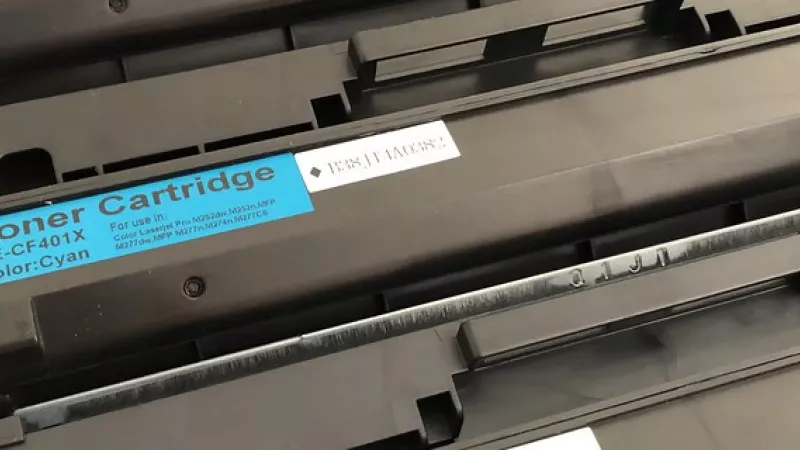
Toner yield is one of the most important numbers in office printing — and one of the most misunderstood. A cartridge rated for more pages is not automatically cheaper. What matters is the cost per page for your actual print volume, not the headline yield on the box.
For South African offices, schools and home businesses, the right toner decision depends on page yield, cartridge price, print coverage, colour use, stock availability and whether the cartridge matches your exact printer model.
Key Takeaway: Ignore the headline page count on its own. Divide the cartridge price by its rated yield to get cost per page — that single number is what actually tells you which cartridge is cheaper to run.
Standard Yield vs High Yield
| Factor | Standard Yield | High Yield |
|---|---|---|
| Upfront price | Lower | Higher |
| Cost per page | Often higher | Often lower |
| Best for | Low monthly volume | Busy, high-volume printing |
| Replacement frequency | More often | Less often |

What Toner Yield Actually Means
Page yield is an estimate of how many pages a cartridge can print under standard test conditions. It gives buyers a fair way to compare cartridges, but it is not a guarantee that every office will get exactly that number — your real total depends on what you print.
Why Your Pages May Use More Toner
Standard yield testing is based on light, controlled pages — real offices rarely print like that. Logos, dense forms, invoices, shaded tables, labels and heavy reports all use more toner than the test page, which lowers real-world yield. The heavier your coverage, the fewer pages you’ll get than the rating suggests.

How to Calculate Cost Per Page
Use one simple formula: cartridge price ÷ estimated page yield = cost per page. A higher-yield cartridge often costs more upfront but can lower the cost per page. This matters most for offices printing hundreds or thousands of pages a month, where small per-page differences add up fast.
Match the Cartridge to the Printer
Always match the exact printer model and cartridge code. A similar-looking cartridge or a close model number can still be incompatible. Check whether the cartridge is original, compatible, standard or high yield, and whether a multi-pack works out cheaper for your volume.
Which Toner Strategy Fits You?
| Your Printing | Best Approach |
|---|---|
| Low monthly volume | Standard yield is usually enough |
| Busy admin desk | High-yield toner cuts replacement frequency |
| Colour printing | Compare each colour cartridge, not just black |
| Shared office printer | Plan around monthly volume and spare stock |
Key Takeaway: High yield is not automatically the bargain. For a low-volume printer, a cheaper standard cartridge can be the smarter buy — run the cost-per-page maths against your real monthly pages before deciding.
How to Buy Toner in South Africa
DistriNode stocks original and compatible toner, ink and laser printers — matched to your exact model, with local stock and fast delivery. Browse toner cartridges, printer cartridges, laser printers and ink cartridges.
Frequently Asked Questions
Does a higher page yield always mean cheaper printing?
No. A higher-yield cartridge costs more upfront and is only cheaper if its cost per page is lower. Divide the price by the rated yield for each option and compare — sometimes a standard cartridge wins for low-volume printing.
Why am I getting fewer pages than the rated yield?
Yield ratings are based on light standard test pages. If you print logos, dense forms, shaded tables or heavy reports, you use more toner per page and get fewer total pages. Higher coverage always reduces real-world yield.
How do I work out cost per page?
Divide the cartridge price by its estimated page yield. For colour printing, do this for each cartridge, not just black. Comparing cost per page rather than upfront price is the most reliable way to control printing costs.
Will a compatible cartridge work in my printer?
Only if it matches your exact printer model and cartridge code. A similar-looking or close-numbered cartridge can still be incompatible, so always confirm the code before buying original or compatible toner.
Sources
- HP — toner yield information